

- This event has passed.
Leibniz: The world and our place in it.
26 November 2025 All day
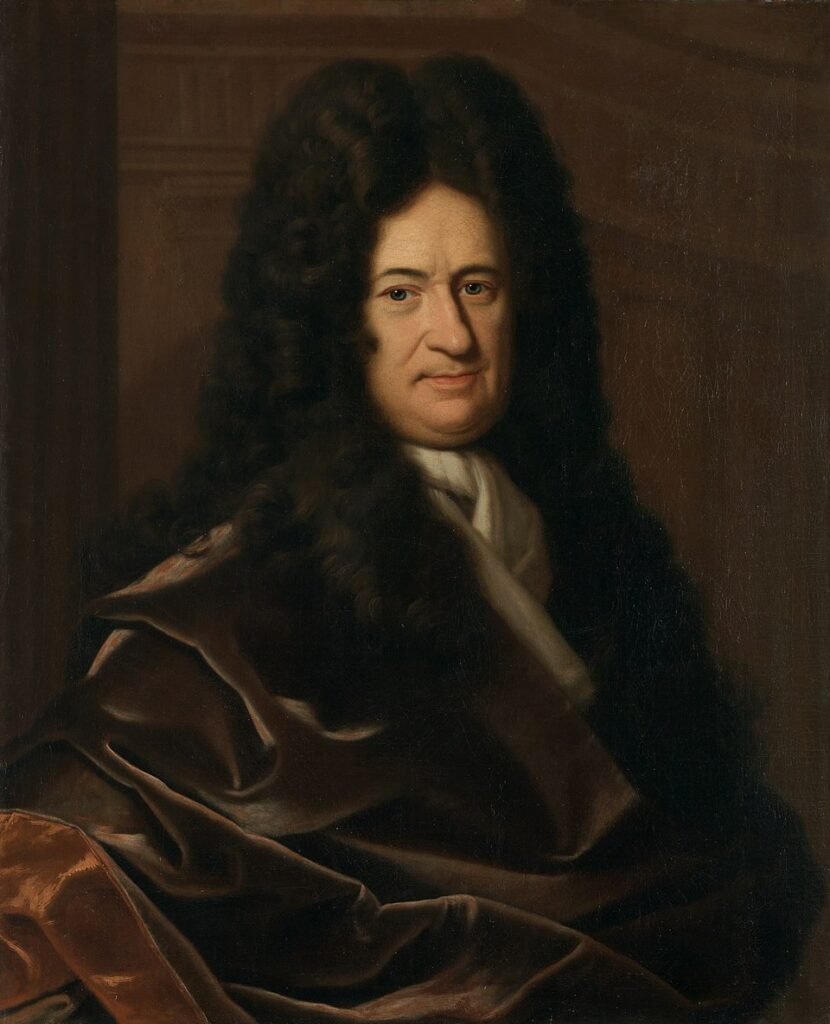
STRAND:WHO DO WE THINK WE ARE? The Self in Philosophy
SPEAKER: John
Summary from Peter K, at the end of the term Philosopher’s Christmas term wrap-up:
“Extraordinary polymath who sees all as entirely separate unities pre-programmed by God so that we appear to be part of the best of all possible worlds.”
Talk Slides and Notes:
20251126 John – PPG Talk – Leibniz – Slides – pdf
20251126 John – PPG Talk – Leibniz – Notes for previous talk to U3A – pdf
Post from Peter K on Facebook the day before the talk:
Tomorrow’s talk (26 Nov) is from John and is about Leibniz, that seventeenth century rationalist philosopher and polymath who believed that we and everything else in the universe are monads and that we live in the best of all possible worlds. Was he a determinist (as Bertrand Russell claimed), was he a hopeless optimist? We may find out tomorrow!
Post from Peter K on the PPG Forum site on the day after the talk
Thanks to John for this talk. I was struck by a number of connections between the thought of Leibniz and that of the much later nineteenth century philosopher Schopenhauer. We know that Schopenhauer read Leibniz and one of his earliest works was a expansion of Leibniz’s account of the Principle of Sufficient Reason – the idea that things do not just happen but always have a reason for happening. (Schopenhauer would have called this a cause in many cases while Leibniz would simply say that it was harmony, or the appearance of cause, preestablished by God.)
Both were idealists – Leibniz at least in part on the basis that extended things cannot exist because they cannot go on being divided in half infinitely and Schopenhauer working from a Kantian perspective that denied we could have knowledge of anything outside our own phenomenal world.
They both saw desire as important – Leibniz saying that somehow his monads had desires (appetitions) and Schopenhauer referring to our will. The character of the entity that has these desires is fixed for Schopenhauer and in some senses also for Leibniz since their history (which presumably might include changes) was fixed by God at the outset.
What were their views on morality? Well both were determinists (at least on some interpretations). Schopenhauer believed (on what evidence?) that our character, and moral character, is fixed from the outset and though able to describe good behaviour in terms of justice and loving kindness he felt that we could not decide to increase our tendency to act in accordance with these moral principles. (This paved the way for Nietzsche to assert that morality is just what suits particular sorts of people.) I was not aware that Leibniz had any view on what constituted moral behaviour, though it would seem that from a God-like perspective we are just as unable to will what we will as Schopenhauer claimed. However, just now looking it up I see Leibniz had a view of morality as being linked to acting to increase the perfection of God’s creation and taking into account the desires of others. Is that similar to Schopenhauer’s view that we will act morally when we recognise our inherent similarity with others, all of us being a product of the Will. On the issue of determinism, Leibniz’s compatibilist view was that though all our actions were determined at the outset by God (John’s film scripts) this does not prevent us from acting spontaneously, and therefore in ways that are moral, even though in some senses we could not have acted otherwise. Schopenhauer’s determinism comes from a different direction, the idea that we are captives of our desires. He was an atheist after all. So we think we act spontaneously like Leibniz claims but seem to have no more ability to act otherwise.
Thanks to John for bringing our some of these issues relating to Leibniz in his talk.
Comment from Paul after the talk (4th December 2025):
Apropos John Belling’s talk last week on Leibniz and our brief discussion of Voltaire’s satarisation in ‘Candide’ of Leibniz’s claim this is the best of all possible worlds, you might be interested in Leonard Bernstein on the subject. Bernstein wrote a musical/opera ‘Candide’ in the mid 1950s (the one immediately before West Side Story). In 1989 at the Barbican he gave a concert version of the work, but just as he was about to conduct the overture he unexpectedly turned to the audience with this:
Leonard Bernstein introduces Candide